


Month: augustus 2026
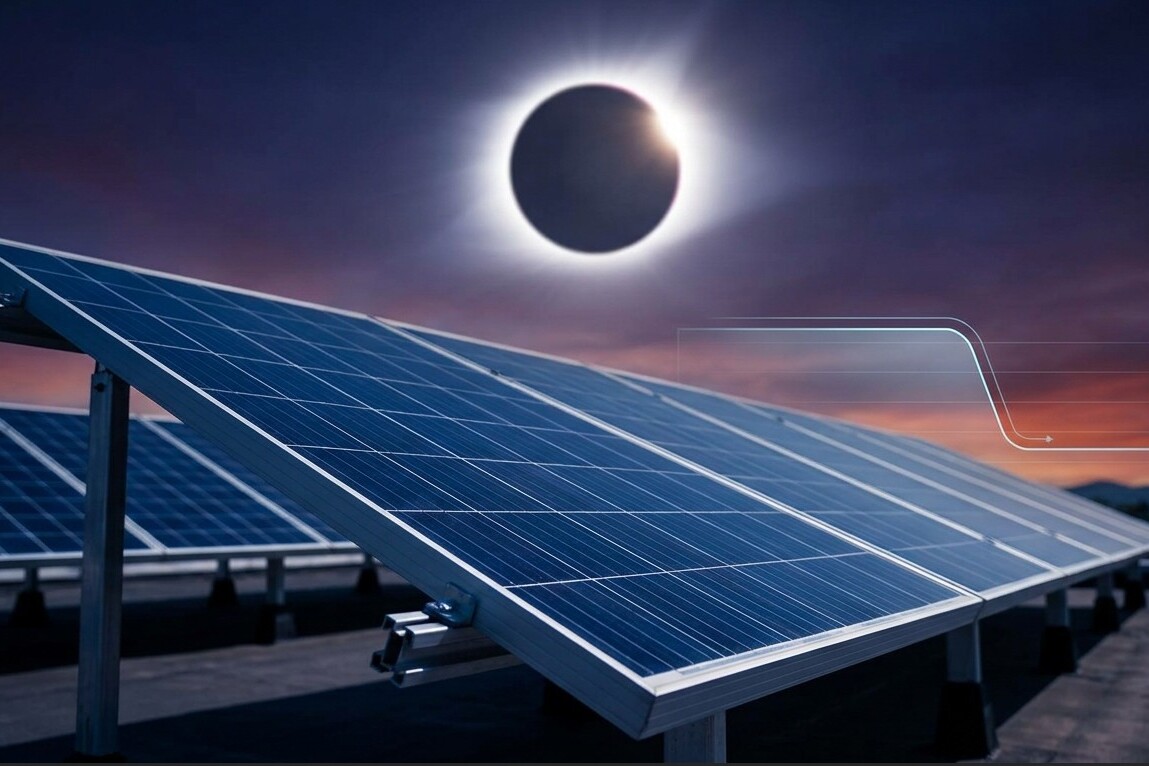
On August 12, the solar eclipse was clearly noticeable from Altea as well. But what did this special natural phenomenon mean for solar panels?
Less sunlight, less production
Solar panels need sunlight to generate electricity. During the solar eclipse, a large portion of direct sunlight was temporarily blocked. As a result, solar panel production also decreased.
In Altea, the maximum point was reached around 20:34, when approximately 99.4% of the solar disk was covered. At that moment, the sun was already very low above the horizon.
The latter is important:
Solar panels produce much less energy at the end of the day anyway than in the middle of the day. Therefore, the impact on the total daily yield was likely limited, even though the drop in production was clearly visible at the time.
The difference compared to August 11
Anyone with a solar installation who checks the monitoring app can clearly see the difference between August 11 and August 12.
On August 11, production gradually declined towards sunset. On August 12, a distinct additional dip was visible around the time of the eclipse.
The solar eclipse was therefore a prime example of how directly solar panels respond to changes in the amount of available sunlight.
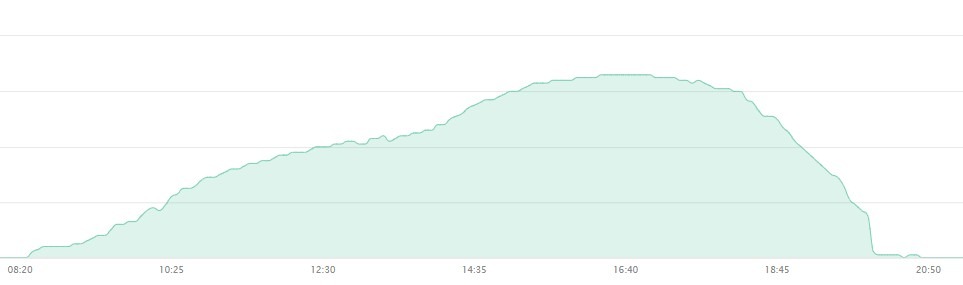
Your production
Do you already have solar panels?
Take a look at your monitoring app and compare the production of August 11 and 12.
Do you see the eclipse reflected in your graph?